The fastest way to find an expired domain worth buying is to start with a searchable auction database, narrow the inventory to domains that match a real project, and then verify five kinds of evidence: former topic, backlink quality, historical traffic, archive continuity, and spam risk. Do not buy from Domain Rating, age, traffic, or a memorable name alone.
CatchSEO's live domain-auction finder combines current listings with those evidence layers, while the expired-domain resource center connects the focused finders, guides, and market reports. Use them to build a shortlist; use this guide to decide which domains deserve deeper review.
The short version: a six-step process
- Define the intended use. Decide whether you need a brand, a relevant content history, defensible backlinks, an existing audience, or some combination.
- Search live inventory. Start with all expired domains currently tracked by CatchSEO, then narrow by price, age, backlink, traffic, history, and risk signals.
- Reject obvious mismatches. Remove unrelated former topics, trademark conflicts, spam histories, and domains whose apparent value depends on one unexplained metric.
- Verify the strongest evidence. Inspect the actual referring domains, anchor text, linked URLs, ranking keywords, archive captures, and traffic trend.
- Estimate the work after purchase. Account for renewal fees, content, restoration of linked pages, technical setup, and legal review—not only the auction price.
- Set a maximum bid before bidding. Use evidence and completed domain-sale prices, not auction momentum, to set the ceiling.
That process is slower than sorting by one score. It is also much cheaper than discovering after purchase that the links are automated, the traffic belongs to irrelevant queries, or the name conflicts with an active brand.
What is an expired domain?
An expired domain is a registration that its previous holder did not renew. It does not always become available immediately. Depending on the registrar, registry, and extension, the domain can move through a grace period, an expired auction, redemption, pending delete, and finally a public drop. ICANN's registrant protections and renewal requirements explain the notices, renewal windows, and redemption protections that apply to generic top-level domains.
The acquisition stage matters because it changes where you buy, how long the transaction takes, and whether the former registrant can still recover the name. A domain listed in an expired auction is not necessarily a domain that has already dropped. Confirm the current marketplace status and rules before bidding.
Start with the reason you want the domain
“Good expired domain” is not a complete requirement. A domain can be excellent for one plan and useless for another.
New brand or project
Prioritize a clear, defensible name, relevant history, clean search results, and manageable trademark risk. Existing backlinks are helpful only if they fit what the new site will honestly become.
Topical site rebuild
Prioritize continuity. The former website, strongest links, archived pages, and ranking keywords should occupy the same subject area you intend to serve. A technically powerful domain about an unrelated topic is not a shortcut to relevance.
Traffic or audience acquisition
Prioritize the current ranking pages, keywords, countries, and trend direction. An aggregate traffic estimate cannot tell you whether the visitors are useful to the planned site.
Link-led research
Prioritize independently earned referring domains, natural anchors, restorable target URLs, and topical fit. Expect some links to disappear after the ownership and content change.
Where to find expired domains
Expired domains appear in registrar auctions, closeout inventory, pending-delete lists, drop-catching services, and aftermarket listings. Each source covers a different stage of the expiration lifecycle.
CatchSEO currently organizes live GoDaddy auction inventory and enriches it with research data. You can use the main finder or begin with a narrower collection:
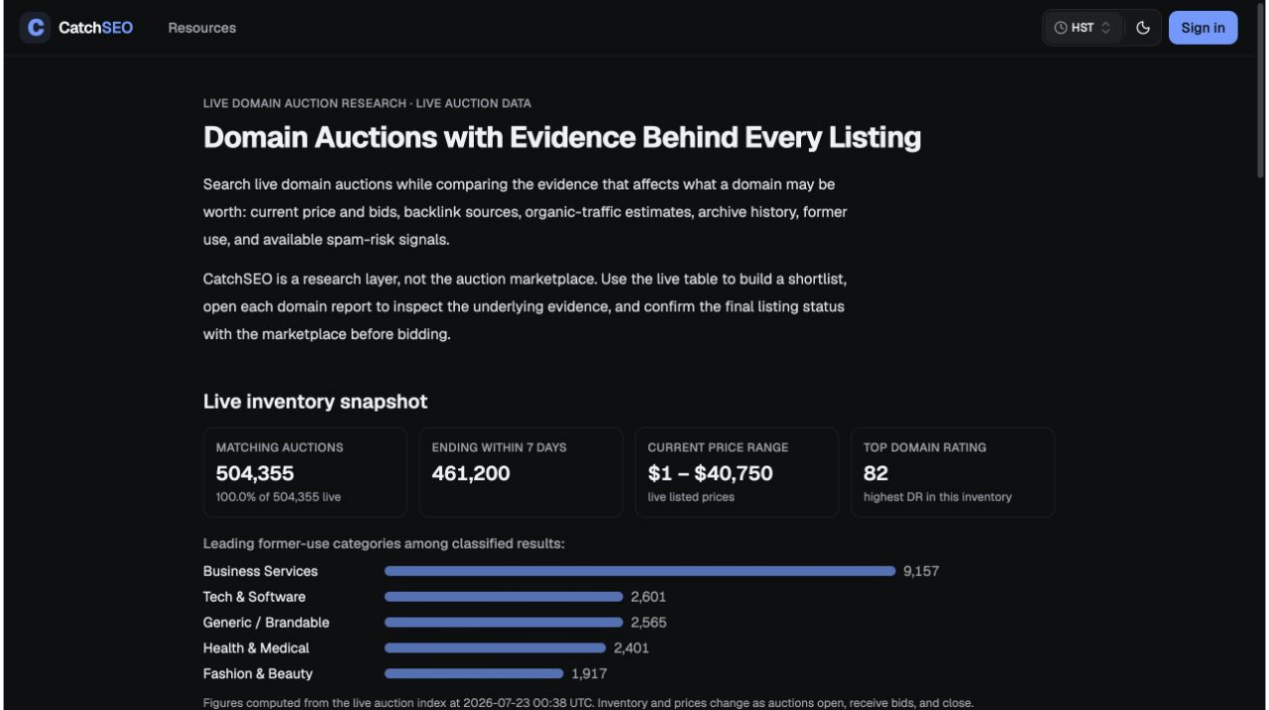
- Clean expired domains with history evidence for initial spam-risk screening.
- Aged domains for sale when registration history matters to the project.
- Expired domains with backlinks when referring-domain evidence is the discovery signal.
- Expired domains with estimated organic traffic when current search visibility matters.
- Cheap expired domains under $100 when acquisition cost is a hard constraint.
- GoDaddy expired-domain auctions when you need marketplace-specific inventory.
These collections are starting points, not endorsements. “Clean,” “aged,” “with backlinks,” and “with traffic” each describe one dimension. None replaces a complete review.
How to evaluate an expired domain
1. Check the former topic and purpose
Open the domain's historical evidence before focusing on its scores. Identify what the site was, who it served, and whether its strongest period matches your intended use.
Watch for abrupt topic changes. A domain that moved from a local business to a coupon site and then to gambling content has a different risk profile from a domain that published consistently in one niche. Topic consistency does not guarantee future rankings, but a chaotic history is a clear reason to investigate further.
2. Review the archive timeline, not one screenshot
One clean Wayback capture can hide years of parking, redirects, doorway pages, or unrelated ownership. Review captures across the full available timeline.
Look for:
- A coherent former organization or publication.
- Useful pages that existed long enough to earn citations.
- Long gaps with no captures or only parked pages.
- Sudden language, brand, or topic changes.
- Redirects to unrelated domains.
- Repeated rebuilds under different owners.
Archive coverage is incomplete. Missing captures mean “unknown,” not “clean.” Corroborate the timeline with backlinks, search results, and registration data.
3. Inspect backlinks and anchor text
Backlink totals are easy to inflate. Start with referring domains—the number of independent websites linking in—then inspect the sources individually.
A stronger profile usually contains editorial links from relevant, real websites; varied brand, URL, and descriptive anchors; and links to pages that had a legitimate reason to be cited. Warning signs include repeated commercial anchors, sitewide links, unrelated languages, hacked-page links, obvious private-blog networks, and large link counts generated by very few websites. Follow the expired-domain backlink evaluation workflow to verify sources, anchors, linked pages, concentration, and retained value.
Use the dedicated expired-domain spam-checking guide for the complete anchor, referring-domain, archive, redirect, and missing-evidence workflow.
Also inspect the target URLs. If valuable links point to old deep pages, decide whether equivalent content can be restored. Sending every historical URL to a new homepage is not a substitute for preserving the reason those links existed.
4. Verify traffic, keywords, and ranking pages
Third-party traffic figures are estimates, not analytics. Treat them as discovery signals.
Check which keywords and pages create the estimate, which countries the visibility comes from, whether the topic is relevant, and whether traffic is stable or collapsing. A domain with 1,000 estimated visits from one irrelevant query can be less useful than a domain with 100 visits spread across durable, relevant topics.
Compare current traffic with the historical peak. A decline may reflect deleted content, lost links, an algorithm change, seasonality, or a previous penalty. The chart identifies the question; the archive and backlink evidence help answer it.
5. Look for spam, redirects, and repurposing
Common expired-domain abuse patterns include casino, pharmaceutical, adult, counterfeit, and payday-loan anchors; autogenerated foreign-language pages; doorway sites; private-blog networks; and chains of unrelated redirects.
CatchSEO's classification is a screening layer built from backlink, archive, traffic, and former-use evidence. It is deliberately not a guarantee. In CatchSEO's July 2026 enriched sample, 3.1% of classified auction domains were labeled clean and 72.7% were labeled toxic. Those percentages describe that classified sample, not every expired domain. The current figures and denominator live in the domain auction statistics report.
Google's spam policies define expired-domain abuse as buying and repurposing an expired domain primarily to manipulate search rankings with content that provides little or no value. A legitimate acquisition still needs a useful purpose, relevant content, and evidence that the former history fits the new project.
Missing enrichment must never be interpreted as a clean result. It means the evidence is not available yet.
6. Check the name, trademark, and active brand risk
Search the exact name, close spelling variants, trademark databases, company registries, and active social profiles. In the United States, begin with the USPTO trademark search, while remembering that registration databases are only one part of a legal review. A domain can have excellent SEO evidence and still be a bad acquisition because another organization owns or continues to use the identity.
Descriptive phrases are not automatically safe, and an expired registration does not erase trademark rights. Obtain professional legal advice when the name is distinctive, commercially important, or close to an active brand.
7. Decide what the domain is worth to your project
Auction price is only one cost. Include renewal, content production, restoration of linked pages, design and development, outreach, monitoring, and legal review.
Completed sales provide market context, but no two domains are identical. Set the maximum from the evidence you can use—not from the seller's valuation, the current bid count, or fear of losing the auction.
A real CatchSEO screening example
On July 22, 2026, the live houselogic.com domain report showed why a high authority score should start an investigation rather than end it:
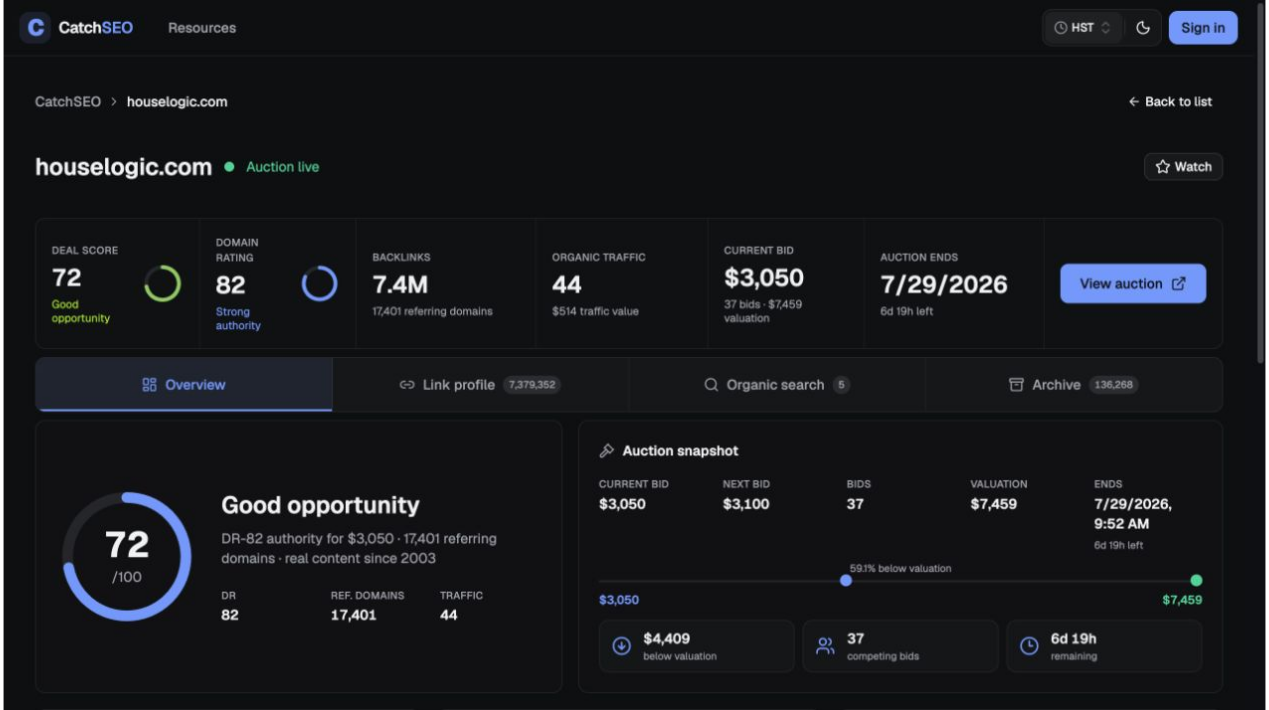
| Evidence | CatchSEO snapshot | What still needs verification |
|---|---|---|
| Domain Rating | 82 | Which sources create the score, and are the links still live and relevant? |
| Referring domains | 17,401 | Are they editorial sources or repeated/automated placements? |
| Backlinks | 7.4 million | Does a small number of sites account for most of the links? |
| Estimated monthly organic traffic | 44 | Which pages and keywords remain visible, and do they fit the intended use? |
| First recorded real content | 2003 | Was the former topic continuous through ownership and archive gaps? |
| Largest recorded archive gap | 1,148 days | What happened during the missing period? |
| Current bid at the snapshot | $3,000 with 36 bids | What is the maximum value after restoration and legal-review costs? |
The metrics are substantial, but they do not answer topical fit, anchor quality, recoverable target pages, or legal risk. The domain's distinctive former identity makes current-brand and trademark research especially important. Auction price, bid count, traffic, and link data can change after this dated snapshot; open the report for the latest evidence.
Common mistakes when buying expired domains
Sorting by Domain Rating and stopping
Domain Rating summarizes one aspect of a link graph. It does not prove topical relevance, clean anchors, durable links, traffic, legal safety, or a usable archive.
Assuming age equals authority
An old creation date may contain years of parking or unrelated ownership. Registration age and useful website history are different facts.
Treating missing data as zero risk
A blank field may mean the enrichment job has not completed or the source could not be retrieved. Unknown evidence should lower confidence, not increase it.
Buying before choosing a use
Without a concrete plan, buyers tend to rationalize whatever metric looks strongest. Define the site, audience, topic, and budget first.
Following late bids emotionally
Bid counts show competition, not value. Set the ceiling before the closing window and be willing to lose the auction.
Expired-domain due-diligence checklist
Before purchasing, confirm that you can answer all of these:
- What was the domain's primary former use?
- Does that topic match the planned project?
- Are the strongest referring domains legitimate and relevant?
- Is the anchor-text distribution natural?
- Which historical URLs earned links or traffic?
- Can those useful pages be restored honestly?
- Does the archive show spam, redirects, or unrelated repurposing?
- Which keywords and countries create the traffic estimate?
- Is the traffic stable, declining, or dependent on one page?
- Is the previous brand inactive, and has trademark risk been reviewed?
- What will renewal, restoration, content, and legal work cost?
- What is the maximum evidence-based bid?
Use CatchSEO's filter and metric definitions when a field is unfamiliar, then open the underlying domain report before acting.
Frequently asked questions
Are expired domains good for SEO?
Some expired domains retain relevant citations, content history, brand recognition, or search visibility. Those assets can support a legitimate new project, but expiration itself provides no ranking benefit. Search engines evaluate the resulting site and can discount inherited signals when the new use is unrelated or manipulative.
How many backlinks should an expired domain have?
There is no universal minimum. A small set of relevant editorial links can be more useful than thousands of automated links. Evaluate source quality, diversity, anchors, target pages, current status, and relevance together.
Should I buy a domain with no traffic?
Possibly. A brandable name or credible backlink history can still have value. The price should reflect the missing audience signal, and the domain must still pass history, spam, relevance, and legal checks.
Can I redirect an expired domain to my existing site?
A redirect is defensible only when it serves users and the old and new content are genuinely related. A blanket redirect bought solely to transfer authority is risky, and search engines may ignore it. Preserve useful destinations and relevance rather than redirecting every URL indiscriminately.
How this guide was researched
CatchSEO Research reviewed the live finder and domain-report workflow, CatchSEO's proprietary auction statistics, primary policies from ICANN and Google, and the practical evidence available to a buyer before bidding. The factual example above is dated so changing auction data is not presented as permanent. Read the full CatchSEO research methodology, including how automated classification, editorial review, and corrections are handled.
Find candidates, then verify the evidence
Start with the live expired-domain search, choose the collection that matches your constraint, and open promising domains for a full evidence review. The goal is not to find the largest number—it is to find a domain whose history, links, audience, risk, and price support the same real-world plan.